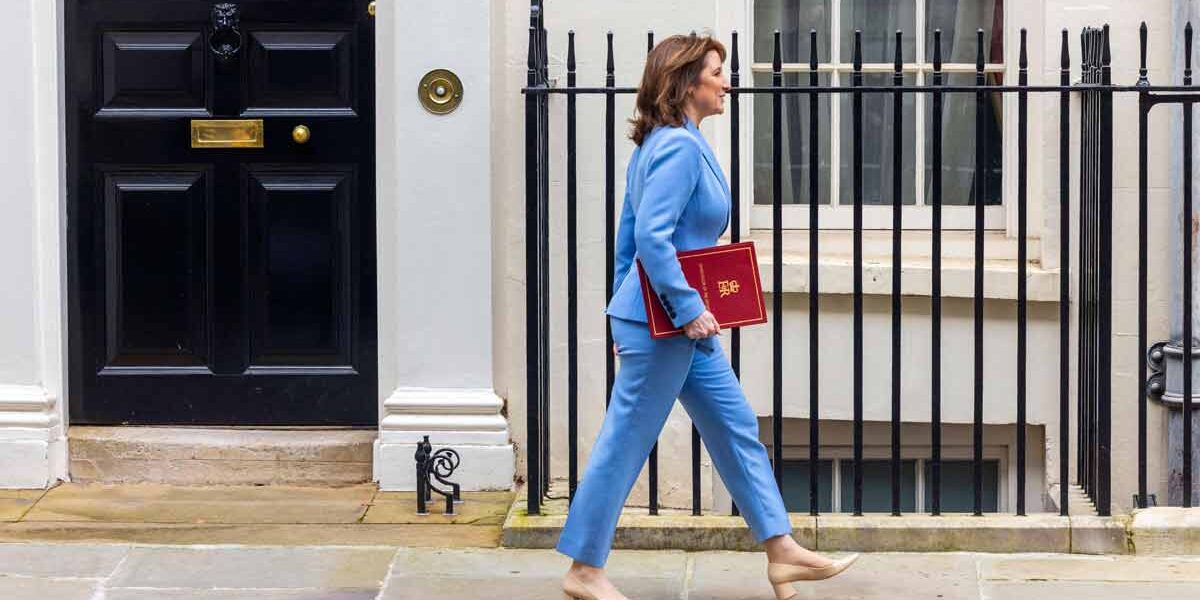
In his Spring Statement, UK Chancellor Rachel Reeves has warned that unemployment in the country is anticipated to hit 5.3% this year, an increase from the current rate of 4.2%. Drawing on predictions from the Office for Budget Responsibility (OBR), Reeves highlighted that this could potentially lead to 1.3 million Britons out of work, marking the highest rate since 2016.
The Chancellor, who previously promised that his statement would set the course for stability and financial prudence, said that the government’s priority was to insulate the UK from soaring global inflation and to protect jobs in the face of rising living costs.
The forecast delivered in the House of Commons places an emphasis on the impacts of the Covid-19 pandemic and the geopolitical tensions in Eastern Europe, which significantly contributed to these figures. Reeves elaborated that recovery has been slower than expected due to these variables, leading to a predicted slowdown in economic growth from 3.8% this year to 1.7% in 2023, as per the OBR figures.
Building on this, the Chancellor explained some of the measures set out to combat the expected rise in unemployment. “We will introduce a new Job Support Scheme aimed to help relieve the pressure on workers confronted with the sharp rise in living costs. We are committed to prioritising jobs and maintaining strong public finances,” he said.
Reeves’ statement has sparked mixed reactions in the online public sphere. Some argue that his reassurances and proposed measures do not go far enough to alleviate growing anxieties about the economic future.
Writing on online platforms, some have critiqued the government for not doing enough to stop the relentless raise in living costs. Jack Leslie, a senior economic analyst at the Resolution Foundation tweeted: “The Spring Statement does little to buffer households from the cost of living hit that is on its way, nor does it significantly alter the trajectory of government austerity beyond next year.”
Criticism also came from opposition benches, with Labour’s Shadow Chancellor, Bridget Phillipson, saying that the government’s “short-term fixes” cannot “undo 12 years of economic mismanagement.”
However, there also emerged a vocal section who praised Reeves’ emphasis on fiscal responsibility. Paul Johnson, director at the Institute for Fiscal Studies, wrote in his column that “while the rises in unemployment are worrying, they represent an unfortunate side-effect of an economic shock rather than a failing in government policy.”
Johnson further commented that providing sufficiently fast and efficient job support during a global crisis was a significant challenge, and that the rise in joblessness under such circumstances is a universally shared problem rather than an exclusively UK-centric issue.
On a more optimistic note, the OBR also predicts that the unemployment rate will gradually decrease after peaking this year and drop down to around 4.2% by 2026.
In response to the mixed reception, a spokesperson for the Chancellor stressed that the Spring Statement was a measured approach that prioritises the protection of jobs in a tumultuous economic outlook. They underscored the government’s commitment to deal resolutely with the uncertain global environment and its impacts on British households.
As the UK braces itself for an unprecedented rise in unemployment, the efficacy of Reeves’ promised measures still remain to be seen. With uncertainty looming over the economic horizon, questions of fiscal responsibility and protective labour policies become ever more pertinent to the public discourse.
Original Source: https://www.personneltoday.com/hr/unemployment-to-peak-this-year-at-5-3-reveals-reeves-in-spring-statement/