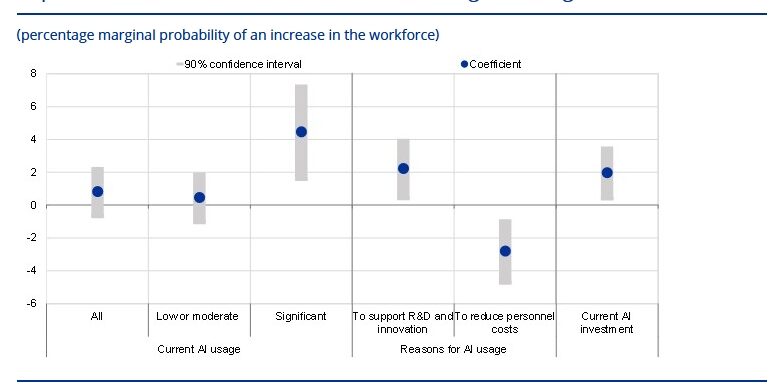
Recent data from multiple research organizations suggests that, contrary to widespread fears, artificial intelligence (AI) has not yet begun replacing European workers in significant numbers. This finding is notable as it challenges prevailing narratives about the potential for AI technology to disrupt labor markets, especially in a region that has historically valued high-level skills and employment security.
Key details
The most recent reports indicate that while AI adoption is accelerating, its effects on employment are still relatively limited. According to a study conducted by the European Commission, nearly 85% of jobs in the EU have not yet been directly affected by AI advancements. The primary sectors utilizing AI include technological development, finance, and certain areas of manufacturing, but there is a marked absence of a widespread replacement of human labor. Instead, many businesses are focusing on complementary uses of AI systems, improving efficiency rather than eliminating jobs.
This trend underscores the complexity of AI integration into the workplace. While many industries experiment with AI tools, most are finding that human oversight and intervention remain essential. For instance, customer service roles are increasingly supported by AI chatbots, but these bots are not yet capable of fully replicating the nuanced decision-making and empathy of human agents. Consequently, rather than purely replacing workers, AI is redefining job roles, often creating new opportunities for workers to focus on higher-value tasks.
Why this matters
This data has implications for policymakers, business leaders, and workers themselves as it suggests a period of transition rather than an immediate crisis. The labor market in Europe has exhibited resilience, with many nations implementing training programs aimed at re-skilling workers for a more automated future. As industries evolve, the need for workers to adapt is becoming increasingly clear, yet the current lack of job displacement may afford society more time to prepare.
Furthermore, the absence of a significant job disruption raises questions about the urgency of regulatory frameworks. Governments across Europe are grappling with how to manage AI technology’s implications. With this new data, there may be a tendency to adopt a more cautious approach rather than pushing for rapid regulatory measures. Striking a balance between fostering innovation while ensuring workers’ protection is crucial in navigating this evolving landscape.
Broader picture
Looking ahead, the sentiment that AI is not yet threatening European jobs might be deceiving in the long term. Projections about the future of work increasingly highlight that the clock is ticking; AI capabilities are advancing rapidly, and many sectors may not have fully realized the technology’s potential yet. While this moment may reflect a brief reprieve from job loss, it is important to recognize that the automation wave can roll in with unexpected speed.
In summary, the current data presents an optimistic picture for European workers, suggesting a temporary phase of AI integration that complements rather than replaces human labor. However, stakeholders would be prudent to keep their focus on the horizon, as ongoing advancements in AI could soon lead to significant shifts in employment structures. The time to prepare for the inevitable changes ahead is now, ensuring that both businesses and workers can adapt effectively to an evolving economic landscape.
Original Source: https://hrexecutive.com/data-shows-ai-is-not-replacing-european-workers-yet-but-the-clock-is-ticking/