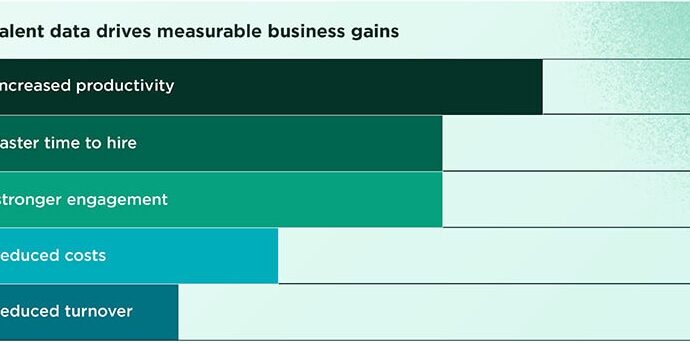
In a recent industry report, research has revealed that disconnected talent data could be costing businesses approximately 3% of their total payroll expenses. This number highlights an often-overlooked issue within human resources and workforce management. As companies increasingly rely on data analytics to guide strategic decisions, the fragmentation of talent information poses a significant risk to financial efficiency and workforce productivity.
The latest turn
The report from Talent Insights Analytics, released just last week, emphasizes the urgent need for businesses to integrate their talent management systems. Disconnected data, stemming from siloed departments and non-uniform data entry practices, leads to inconsistencies in employee information, making it difficult for HR teams to accurately assess skill sets, job performance, and even compensation benefits.
Expert analysts note that with a staggering global workforce size, even a seemingly trivial percentage like 3% can translate into millions of dollars in unnecessary payroll expenses. This can severely affect a company’s bottom line, particularly in industries with thin profit margins. Companies that neglect to bridge these data gaps may ultimately harm their competitive advantage.
How the story got here
The complications began when companies transitioned toward digital HR solutions, often without a cohesive strategy for data management. Separate platforms for recruitment, performance evaluation, payroll, and employee development have led to the emergence of data silos—disconnected islands of information that fail to communicate effectively with one another.
Furthermore, as businesses have rapidly adapted to hybrid work environments, the traditional means of overseeing employee engagement and performance have shifted. Recruitment and retention strategies increasingly rely on data-driven methods, but if talent data is fragmented, the conclusions drawn from these analyses can be misleading. Companies that are unaware of this disconnect may find their hiring practices to be less than effective, leading to increased turnover and, consequently, higher payroll costs.
Next expected developments
Faced with these revelations, many organizations are now prioritizing initiatives to unify their talent management data. This trend is anticipated to shape the future of human resources strategies by encouraging businesses to adopt integrated software solutions that allow for seamless data sharing across departments. Companies are expected to invest in platforms that not only centralize talent information but also provide real-time analytics to help identify payroll or recruitment inefficiencies.
In the coming months, watch for case studies from companies that successfully implemented integrated systems to streamline their talent management processes. These success stories could serve as models for others looking to mitigate payroll-related costs associated with disconnected data. Ultimately, as companies recognize the financial implications of disparate talent information, the industry may see a rapid evolution toward unified data management in HR practices.
Original Source: https://hrexecutive.com/disconnected-talent-data-a-3-cost-to-payroll/