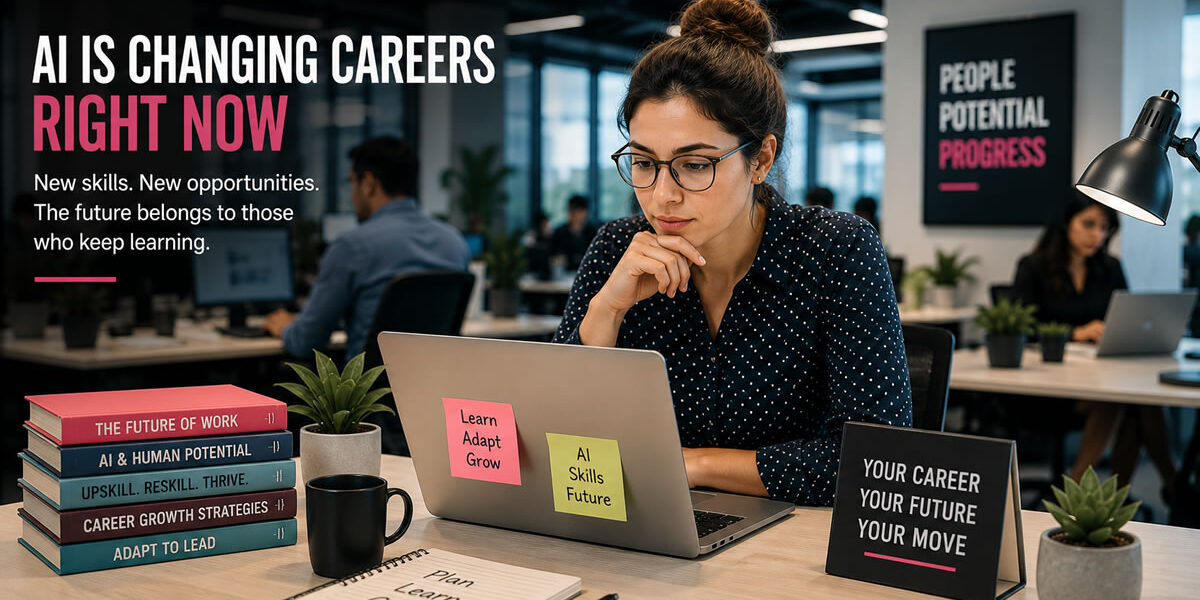
or years, conversations about artificial intelligence in the workplace focused on the future.
Would AI eventually automate jobs? Would certain professions disappear? Would technology replace workers?
Today, those questions are becoming less theoretical.
Across industries, AI is already beginning to influence hiring decisions, career pathways, skills requirements, promotion opportunities, and workforce planning. While many organisations continue describing AI as a productivity tool, employees are increasingly experiencing it as something far more personal: a force reshaping the careers they are building right now.
Recent workforce forecasts suggest job growth in many AI-affected occupations may slow significantly over the coming years as organisations rethink how work is performed and where investment is directed. Some technology companies have already openly acknowledged redirecting resources toward AI initiatives while reassessing traditional workforce spending.
The result is growing uncertainty among employees.
Many workers are no longer asking whether AI will affect their jobs. Instead, they are asking how quickly it will affect them personally.
At the same time, new opportunities are emerging.
Demand for AI-related skills continues to grow, while employers increasingly seek workers capable of combining technical understanding with communication, leadership, problem-solving, and human judgement. Research examining global job postings suggests a growing emphasis on hybrid skill sets rather than purely technical expertise.
This creates both risk and opportunity.
Employees who continue learning and adapting may discover new career paths emerging alongside AI adoption. Those who assume their existing skills alone will remain sufficient may find themselves facing a rapidly changing employment landscape.
For HR teams, the challenge is equally significant.
Organisations must now think beyond technology implementation and focus on workforce readiness. Employees need clarity, training, and realistic expectations regarding how AI will influence their roles and future opportunities.
Because AI is no longer simply changing how work gets done.
It is increasingly changing how careers are built.
This article was published by HR-INFO, Australia’s long-standing human resources and workplace information resource.